
Minimally Invasive Full Mouth Rehabilitation in a Case of Tetracycline Staining, Severe Mottled Enamel, and Deep Bite

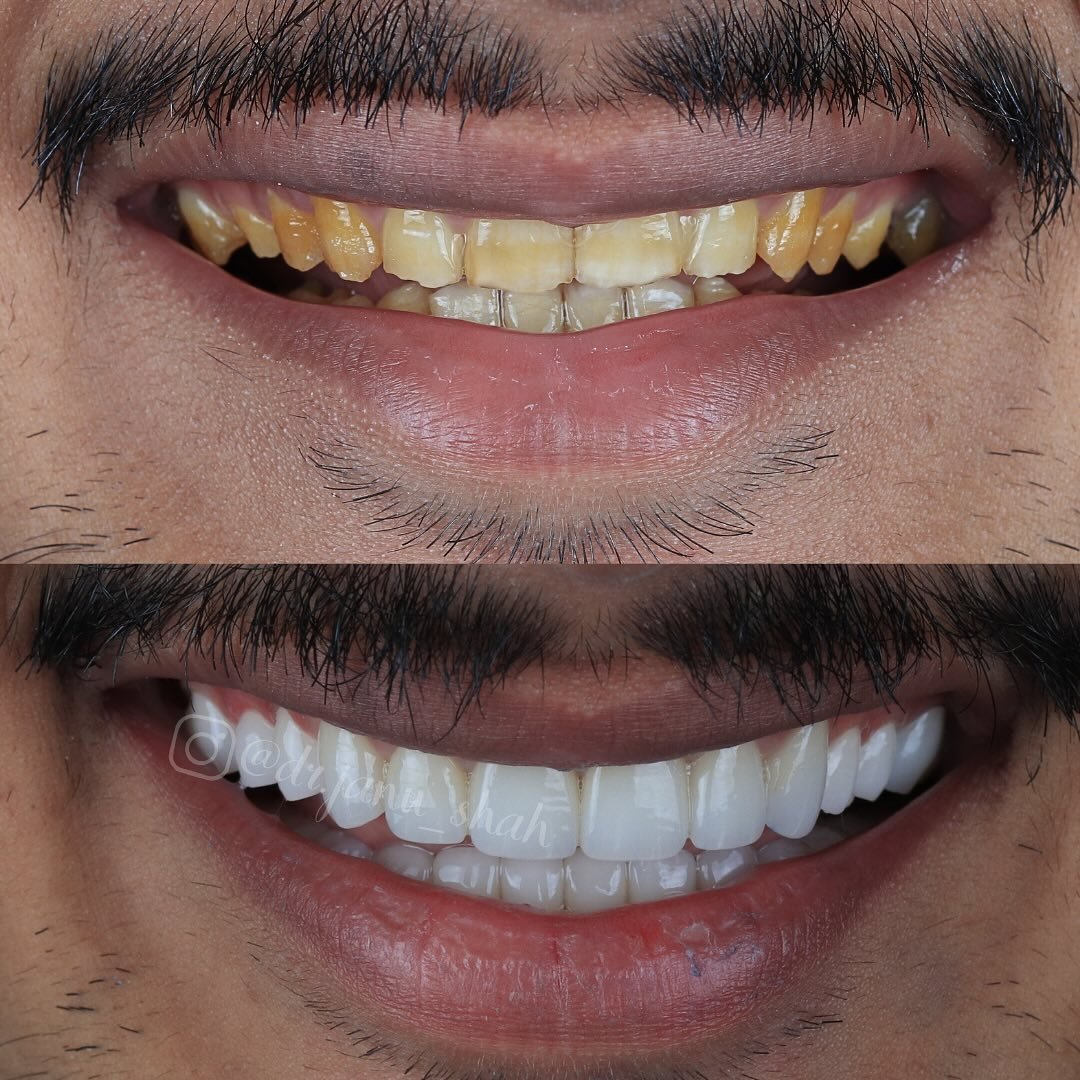
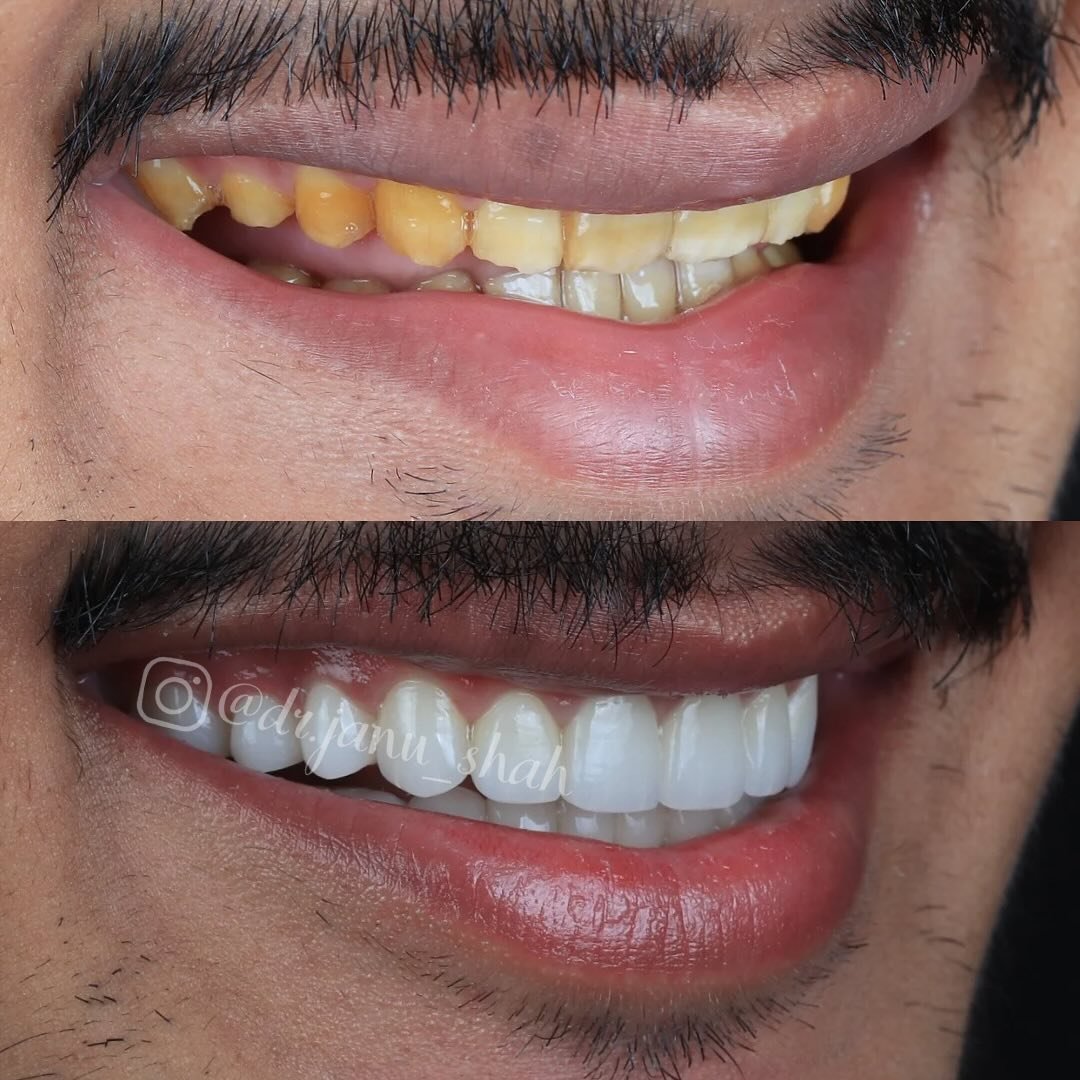
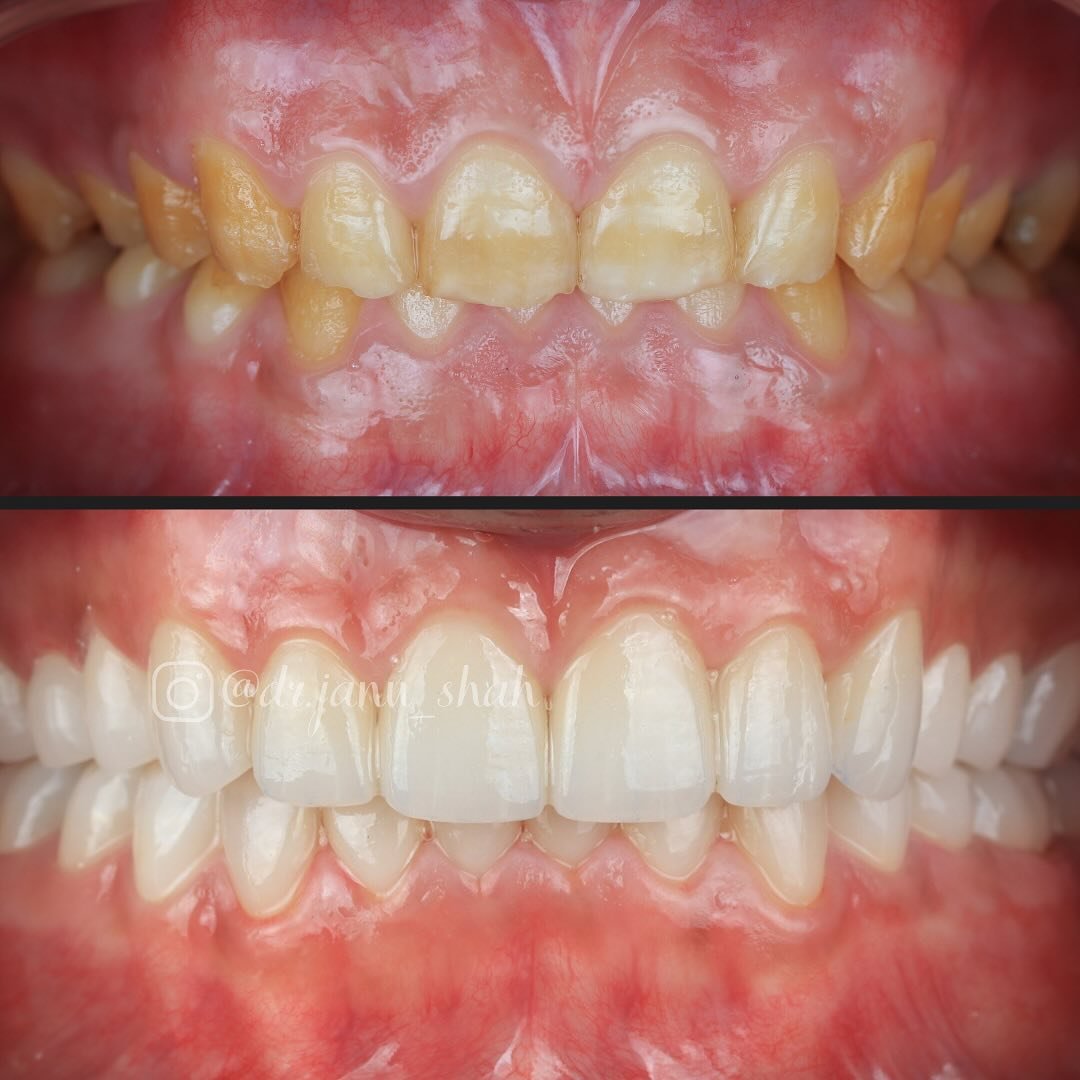
Dentistry can truly be life changing, especially when it comes to comprehensive smile makeovers. This case demonstrates a minimally invasive full mouth rehabilitation for a patient affected by severe tetracycline staining, mottled enamel, widespread proximal caries in posterior teeth, deep bite, and retroclined upper incisors. The clinical goal was to restore both esthetics and function with maximum preservation of healthy tooth structure.
Clinical Assessment
The patient presented with:
- Generalized brown and gray discoloration from tetracycline staining, visible throughout the upper and lower arches
- Severe mottling of the enamel on both anterior and posterior teeth
- Proximal caries affecting nearly all posterior teeth
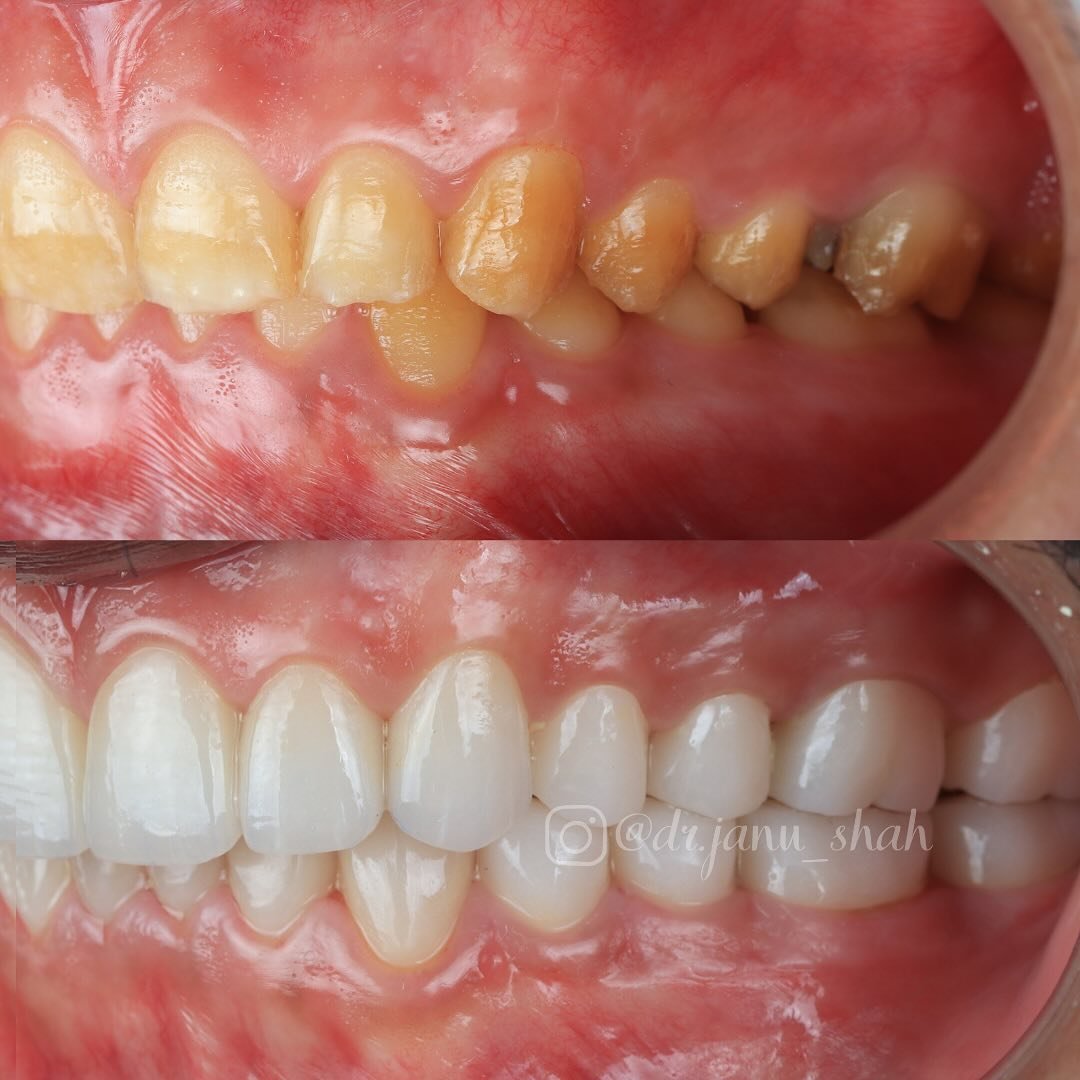
- A deep bite with functional concerns
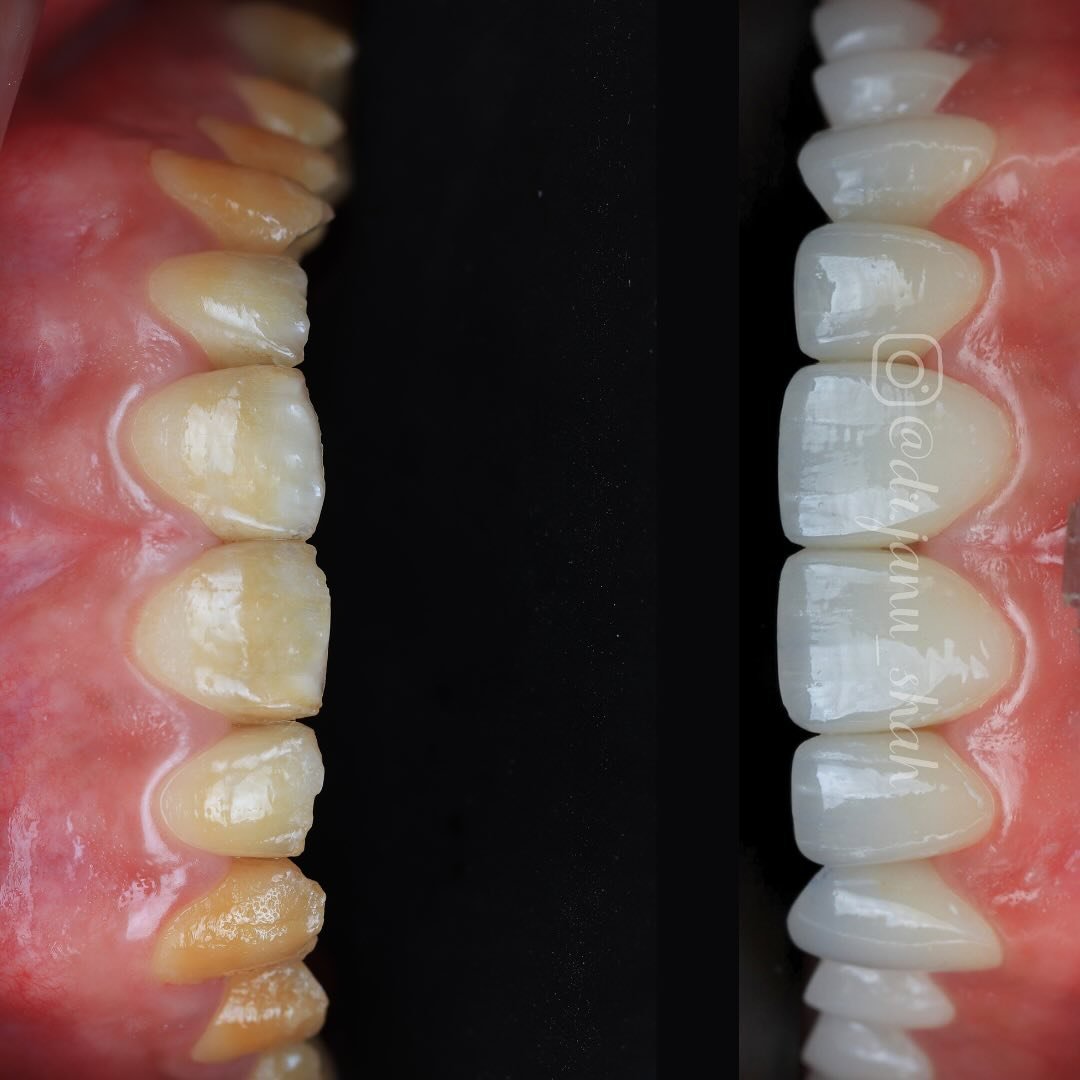
- Retroclination of the upper anterior segment
The patient’s concerns centered on the appearance of his smile and the structural vulnerability of the affected enamel. Clinical and radiographic examinations confirmed the extent of both the esthetic and functional issues that would need to be managed.
Treatment Planning
A comprehensive treatment plan was developed with the goal of addressing all esthetic and functional requirements while protecting the retained natural tooth structure as much as possible.
- All posterior teeth were planned for full coverage monolithic zirconia crowns. This provided caries control, protection for the undermined and mottled enamel, and improved occlusal stability.
- The six upper and six lower anterior teeth were planned for ultra-conservative Emax veneers. This approach emphasized enamel preservation while delivering significant improvements in color and shape.
- Vertical dimension was increased by approximately two millimeters at the molar region as part of the full mouth rehabilitation to correct the deep bite and create a more harmonious relationship between the anterior and posterior teeth.
- Correction of the retroclined upper incisors was achieved as part of the restorative protocol for anterior veneers, optimizing both esthetics and function.
Treatment Sequence
The full mouth rehabilitation proceeded in the following stages:
Posterior Restoration
All posterior teeth were carefully prepared for monolithic zirconia crowns. Special attention was paid to removal of caries and protection of remaining enamel. The crowns were fabricated to ensure durability and anatomic form, supporting the planned increase in vertical dimension.
Anterior Restoration
Ultra-conservative Emax veneers were prepared for both the upper and lower anterior teeth. Minimal preparation designs were used to maintain maximum enamel and provide an optimal bond. The veneers were designed to improve color, mask underlying enamel defects, and correct the retroclination of the upper incisors.
Occlusal Adjustment
Vertical dimension was raised cautiously and evenly using temporary restorations before placing the final crowns and veneers. The deep bite was corrected, and stable, comfortable function was established. Final adjustments were made to ensure harmonious occlusion and esthetic alignment.

Outcome
The patient’s smile was transformed, with a significant improvement in color and harmony. The tetracycline stains and mottled appearance were fully masked by the restorations. Caries control and full coverage in the posterior teeth provided predictability and longevity, while the conservative nature of the anterior veneers preserved the natural teeth and created a bright, natural smile. The deep bite was resolved, and the retroclined upper incisors were corrected. The patient reported a substantial enhancement in both function and confidence.
Results
Treatment resulted in balanced gingival levels and a corrected smile line. The ceramic restorations provided a natural appearance and effectively masked the effects of fluorosis. The deep bite was resolved, and the previously worn lower incisors were protected. The patient expressed a high level of satisfaction with both the esthetic and functional results.
Discussion
This case demonstrates that minimally invasive full mouth rehabilitation is possible even in the presence of severe esthetic and structural compromise. Careful planning and conservative preparation allowed for major functional and esthetic changes while preserving as much healthy tooth as possible. Raising the vertical dimension in this highly controlled manner helped correct the deep bite and retroclined incisors, improving both long-term health and appearance. Using monolithic zirconia for posteriors and Emax for anteriors allowed a balance of strength and esthetics.
Conclusion
Full mouth rehabilitation for complex cases involving tetracycline staining, mottled enamel, caries, and malocclusion can be accomplished with a conservative, patient-centered approach. Modern materials and protocols enable the dental professional to transform smiles, improve function, and help patients experience truly life changing results. Special thanks to the patient for giving permission to share these clinical results.